

Spelling
BJU Press’s spelling product line equips students to master spelling by recognizing word relationships and structural patterns in grade-appropriate lists. Activities include word study, word sorting, proofreading, dictionary skills, and writing. In the primary grades, word lists contain high-frequency words, phonetic words, and challenge words with irregular spellings. In the intermediate grades, lists add syllable patterns and derivational suffixes. Frequent assessments give opportunities for self-assessment and retrieval practice. They also build student confidence and encourage mastery for producing God-honoring written communication.


Vision
To equip students to apply science to life by observing and analyzing scientific information and by evaluating scientific models from a biblical worldview.
Goals
- To develop a foundational understanding of scientific knowledge and skills
- To engage students in scientific methods to solve real-world problems
- To use models to explain and describe observations and make predictions
- To enable students to interpret and apply scientific knowledge through the lens of biblical teaching
Program Approach for Spelling
Biblical Worldview

God created mankind to declare His glory through being like Him. He has made each of us in His image and has called us to imitate His deeds. One way we imitate God is in the use of language. God’s attributes are reflected in the characteristics and usefulness of language. The Bible is His Word, and in it He communicates to man His truth and His love.
God has created people with the ability to use language to glorify Him and to show love to others. In order to do this, we must develop our two types of language skills: receptive language (listening and reading) and expressive language (speaking and writing). Spelling is one of the skills needed for effective writing. A biblical worldview sees spelling as a vital tool in the production of God-honoring written communication.
Throughout the BJU Press Spelling program, proofreading and writing activities portray real-life situations in which Christians use writing. Whether using writing to participate in worship, to minister to the needs of others, to provide information, or to complete routine tasks, a Christian realizes accurate spelling is essential for clear written communication.
Academic Rigor & Critical Thinking
Learning to spell is an essential part of learning to communicate accurately in writing. The BJU Press Elementary Spelling product line is designed to equip students with the ability to spell correctly a bank of known words and to apply spelling generalizations to unknown words.
It also equips the students to use a dictionary to check or correct spelling and to proofread effectively. This is accomplished through the development of critical thinking rather than rote memorization.
Meaningful Instruction
Our product line incorporates key elements of the word study approach. Through a balance of direct instruction and interactive learning, the teacher models the thinking process students need to develop. The teacher uses demonstrations, questions, and discussion to guide students in identifying and applying spelling generalizations.
The use of the word study approach strengthens critical thinking so that students understand, retain, and apply spelling skills. In word sorting activities the students investigate words by identifying, comparing, contrasting, and drawing conclusions about spelling patterns and rules. Word sorts help students organize what they know about words and learn generalizations they can apply to unfamiliar words. Dictionary skill lessons support learning to spell the words and help students effectively use the information in a dictionary entry.
Carefully Crafted Word Lists
In the primary grades, students learn that spelling represents the sounds in words. Word lists contain high-frequency words with reliable phonics and structural generalizations. Lists also contain the most common words with irregular spellings as memory or challenge words. In the intermediate grades students discover that spelling also represents meaning. Lists progress to include various syllable patterns, derivation formed by adding suffixes, and words with Greek or Latin word parts.
Vocabulary skills are presented throughout our program. These skills are tied to the spelling generalizations being taught and are used to support learning to spell the words. Review features help students develop spelling mastery. Each weekly list includes review words taken from the previous week’s list.
Purposeful Application
Spelling skills give teachers insight into how well students hear sounds and how well they are connecting those sounds to reliable patterns. Also, spelling is an effective indicator of what students know about words and about language.
Our Spelling materials provide opportunities for students to apply the spelling skills and strategies they are learning. Many activities involve using words spelled correctly in a proper context for meaning and usage.
Proofreading and writing experiences transfer the responsibility for accurate spelling to the students and promote a desire to spell correctly. Students grow in their awareness of their own spelling and increase their skill in finding their own spelling errors. Many of the proofreading passages and writing activities portray real-life situations in which Christians use writing. This reinforces our goal that students view spelling as a tool to be used to honor God and to love and serve others.

Love for Learning
Making Spelling Enjoyable and Encouraging Success
The BJU Press Spelling program includes colorful Worktexts with enjoyable themes. Our Worktext pages have age-appropriate art, photo, and page design features that are not distracting. Spelling skills are presented in a variety of interesting ways. Interactive lessons provide opportunities for the students to actively participate in the learning process. We use review activities and games to stimulate interest while providing worthwhile practice.
The Spelling program is designed to foster success in each student. Our desire is that each student understands that he can learn to spell, he can remember the spelling of the types of words he has learned about, and he can apply what he has learned to unfamiliar words.
Writing lessons provide opportunities for real-life application of spelling and writing skills. Activities include journaling, designing a brochure, making a list to organize information, writing in response to a Bible passage, and writing a card or letter. Lessons begin with a story or discussion, and then the students complete an activity related to the lesson. For example, after a story in which the characters write a thank-you note, the students write a thank-you note they can give to someone.
Materials
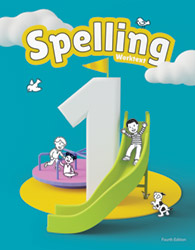
Student Worktext
Each Student Worktext contains grade-appropriate spelling lessons presented in thirty-two weekly lists. Lessons include word sorting, word study, proofreading, dictionary skills, and writing application activities. The Worktext for all grade levels contains a Spelling Dictionary with selected words from the weekly lists. For grades four through six, a Spelling Handbook at the back of the book contains the Spelling Dictionary as well as a number of charts about suffix rules, syllable patterns, and Greek and Latin word parts for student reference.
Teacher Edition
As the foundation of the program, the Teacher Edition coordinates all the instruction and activities with a balance of structure and flexibility. Through interactive lessons, the teacher guides the instruction of spelling patterns and rules, activities using words in context, proofreading, dictionary skills, and writing activities.
Each weekly spelling list is presented as a five-day lesson sequence. Reduced-size Worktext pages with answers appear in each lesson. The Teacher Edition also includes a copy of the Spelling Handbook section of the Worktext, and the Appendix in each book provides supplemental information to enhance instruction.
Bible Action Truths focus on goals for Christian attitudes and conduct. A listing of these and Bible Promises is included in the Appendix section of each Teacher Edition. Also located in each Teacher Edition Appendix, Leading a Child to Christ includes helpful suggestions for the teacher as he or she discusses salvation with a child.
Scope & Sequence
30 Weekly Word Lists
Ten words per list (nine pattern words and one sight word); Words frequently used in writing; Review list with pattern words every fifth week
Generalizations
Phonics generalizations: short and long vowel patterns, r-influenced vowel patterns, diphthongs; Consonant patterns: consonants, consonant blends and digraphs, soft c; Structural generalizations: suffixes s, es, ed, er, est, ing; suffix rules: no change to base word, double the final consonant, drop the final e
Word Study
Phonics and structural analysis activities; Word-meaning activities: sentence contexts, rhyming words, meaning or picture clues, puzzles
Proofreading
Spelling awareness: identifying the correct spelling for a given word, identifying and correcting misspelled words, standardized-test practice
Dictionary Skills
Location skills; Alphabetical order to the first and second letter; Entry words, guide words, word forms, sample sentences
Writing Application
Dictation sentences in tests
Decoding and Encoding
Word study
Word sort: classifying words based on word patterns; Word building: creating words by addition, deletion, and substitution of letters; Phonics and structural analysis activities; Word meaning activities: using words in context, meaning clues, synonyms, antonyms, homophones, and analogies
Dictionary skills
Location skills; Alphabetical order to the first, second, and third letter; Entry words, guide words, and word forms
Writing and Spelling
Proofreading
Spelling awareness: identifying the correct spelling for a given word, identifying and correcting misspelled words in sentences or passages; Standardized test practice
Writing application
Dictation sentences for weekly tests; Strengthening the application of spelling skills through writing prompts for writing sentences, lists, paragraphs, and journal entries; Real-life writing application including an informational poster, writing a thank-you note, lists, and a prayer
Automaticity
Vowel patterns
Short and long vowel patterns; R-influenced vowel patterns; Diphthongs and the schwa
Consonant patterns
Consonant blends and digraphs; Soft c; Soft g; Silent consonants
Structure
Suffi xes -s, -es, -ed, -er, -est, -ing—No changes to base word, Doubling the final consonant, Dropping the final e, Changing y to i; Two-syllable words ending in -le, -er, -y, and other reliable patterns; Compound words; Contractions
Decoding and Encoding
Word study
- Word sort: classifying words based on word patterns
- Word building: making different words by choosing or adding a blend
- Phonics and structural analysis activities
- Syllable division: compound words, words with two middle consonants, words ending in -le, open and closed syllables
- Word meaning activities: using words in context, meaning clues, synonyms, antonyms, homophones, and analogies
Dictionary skills
- Location skills
- Alphabetical order to third letter
- Entry words, guide words, and word forms
Writing and Spelling
Proofreading
- Spelling awareness: identifying the correct spelling for a given word, identifying and correcting misspelled words in sentences or passages of increasing complexity
- Standardized test practice
Writing application
- Dictation sentences for weekly tests
- Strengthening the application of spelling skills through writing prompts for writing sentences, lists, paragraphs, and journal entries
- Real-life writing application including an instructional poster, a journal entry, a menu, a recipe, a schedule, and a thank-you note
Automaticity
Vowel patterns
- Short and long vowel patterns
- R-influenced vowel patterns
- Diphthongs and the schwa
Consonant patterns
- Consonants and consonant blends and digraphs
- Soft c
- Soft g
- Silent consonants
Structure
- Suffixes -a, -be, -dis, -re, -un, -s, -es, -ed, -er, -est, -ing, -ful
- No changes to base word
- Doubling the final consonant
- No changes to base word
- Dropping the final e
- Changing y to i
- Two-syllable words ending in -le, -er, -y, and other reliable patterns
- Compound words
- Contractions
Decoding and Encoding
Word study
- Word sort: classifying words based on word patterns
- Word building: forming words by manipulating patterns, syllables, and affixes
- Phonics and structural analysis activities
- Syllable division: base words and affixes, two-syllable vowel-consonant patterns, and unstressed syllables
- Word meaning activities: using words in context, meaning clues, synonyms, antonyms, homophones, analogies, and categories
- Accenting syllables: words with affixes, syllable patterns
Dictionary skills
- Location skills
- Alphabetical order to the fourth letter
- Alphabetizing words between guide words
- Use of the pronunciation key
- Use of a dictionary entry: entry word, pronunciation, word forms, definitions, sample sentences, and parts of speech
Writing and Spelling
Proofreading
- Spelling awareness: identifying the correct spelling for a given word, identifying and correcting misspelled words in sentences or passages of increasing complexity
- Standardized test practice
Writing application
- Dictation sentences for weekly tests
- Strengthening the application of spelling skills through writing prompts for writing sentences, lists, paragraphs, and journal entries
- Real-life writing application including writing a get-well card, an invitation, a journal entry, lists, and a descriptive paragraph
Automaticity
Vowel patterns
- Short and long vowel patterns
- R-influenced vowel patterns
- Diphthongs and the schwa
- Reliable patterns in two-syllable words
- Unstressed-syllable vowel patterns
Structure
- No changes to base word
- Doubling the final consonant
- Dropping the final e
- Changing y to i
- Compound words
- Inflectional suffixes, prefixes, and derivational suffixes
- Etymology: Greek and Latin word parts
32 Weekly Word Lists
Word lists: 20 pattern words, 5 review words; Interactive study method
Generalizations
Phonics generalizations: review of long, short, and r-influence vowels sounds; diphthongs; reliable patterns in multi-syllable words; unstressed syllable vowel patterns; Structral generalizations: compound words, inflecional suffixes, prefixes, derivational suffixes; Suffix rules: no change to the base word, doubling the final consonant, dropping the final e, changing y to i
Word Study
Word sorting: classifying words based on shared features; Word building: forming words by manipulating patterns, syllables, affixes; Word-meaning: using a word in context of meaning (definitions, synonyms, antonyms, homophones, homographs, categories, analogies)
Proofreading
Spelling awareness: identifying the correct spelling for a given word, identifying and correcting misspelled words in sentences or passages; Standardized-test practice
Dictionary Skills
Location skills; Alphabetical order to the fourth letter: alphabetizing words between guide words; Use of the pronunciation key; Use of a dicitonary entry: entry word, pronunciation, word forms, definitions, sample sentences, etymology; Syllable division: base words and affixes, two-syllable vowel-consonant patterns, unstressed syllables; Accenting syllables: compound words, words with affixes, syllable patterns, accent changes in homographs
Writing Application
Dictation sentences in weekly tests; Real-life writing application
32 Weekly Word Lists
Word lists: 25 words (20 pattern words, 5 review words); Interactive study method
Generalizations
Phonics generalizations: reliable patterns in multi-syllable words, including review of previously learned vowel and consonant patters; unstressed syllable vowel patterns; Structral generalizations: compound words, inflecional suffixes, prefixes, derivational suffixes; Suffix rules: no change to the base word, doubling the final consonant, dropping the final e, changing y to i; Etymology: Greek word oarts; Latin prefixes, roots, and suffixes
Word Study
Word sorting: classifying words based on shared features; Word building: forming words by manipulating patterns, syllables, affixes, word roots; Word-meaning: using a word in context of meaning (definitions, synonyms, antonyms, homophones, homographs, categories, analogies, derivations, and sentence completion)
Proofreading
Spelling awareness: identifying and correcting misspelled words in sentences or passages; Standardized-test practice
Dictionary Skills
Alphabetical order: alphabetizing words between guide words; Use of the pronunciation key; Use of a dicitonary entry: entry word, pronunciation, parts of speech, word forms, definitions, sample phrases or sentences, etymology; Syllable division: base words and affixes, two-syllable vowel-consonant patterns, unstressed syllables; Accenting syllables: compound words, words with affixes, syllable patterns, accent shifts in homographs and derivations
Writing Application
Dictation sentences in weekly tests; Real-life writing application